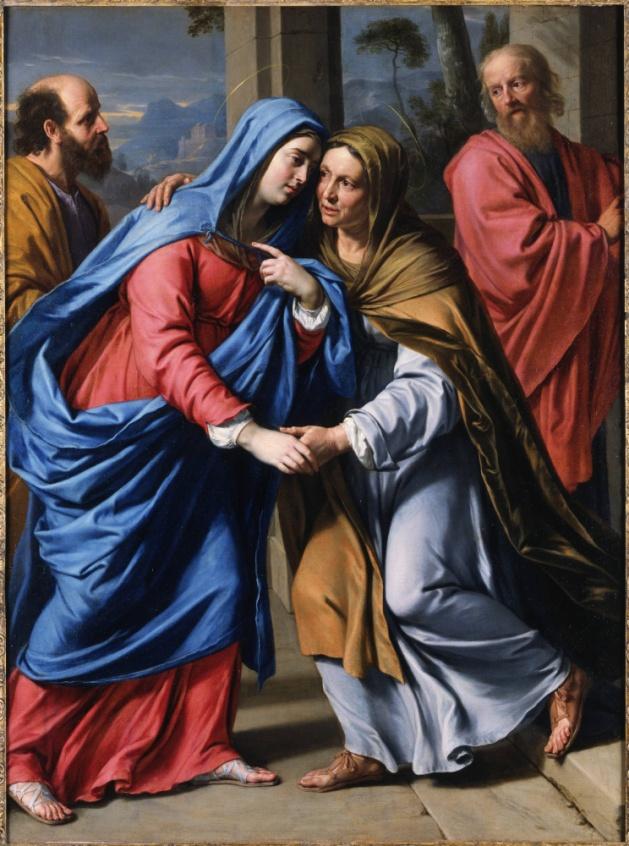
“Now as they went on their way, he entered a certain village, where a woman named Martha welcomed him into her home. She had a sister named Mary, who sat at the Lord’s feet and listened to what he was saying. But Martha was distracted by her many tasks; so she came to him and asked, ‘Lord, do you not care that my sister has left me to do all the work by myself? Tell her then to help me.’ But the Lord answered her, ‘Martha, Martha, you are worried and distracted by many things; there is need of only one thing. Mary has chosen the better part, which will not be taken away from her.’”
-Luke 10:38-42
It is just about Christmas now. There may be a temptation, a habit, or an expectation to be busy or “distracted by many tasks”— cooking, cleaning, going to see family or friends, giving gifts, receiving gifts, perhaps hosting guests, deciding what movie to watch.
Given that, it might be worth pausing to remember that, in some fundamental way, Christmas is about rest. Rest, because the word of Christmas is "born to you this day is a Savior." There isn't anything we can do to bring this about; it is pure gift, all from God’s side. We can only receive it.
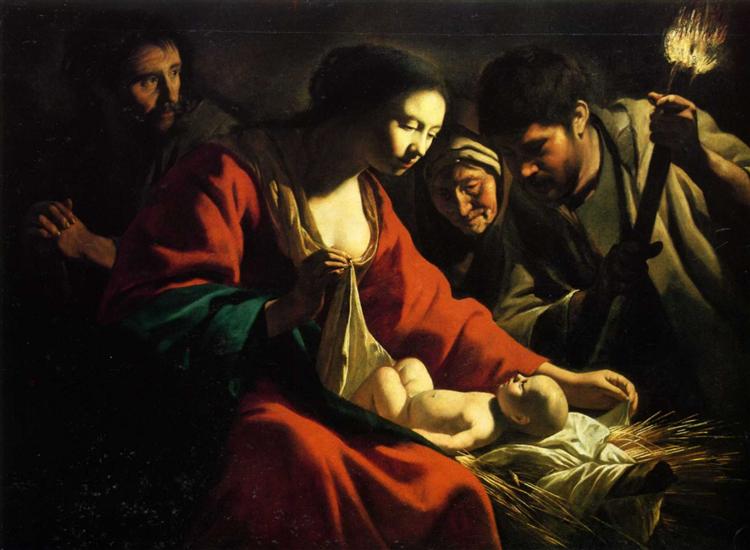
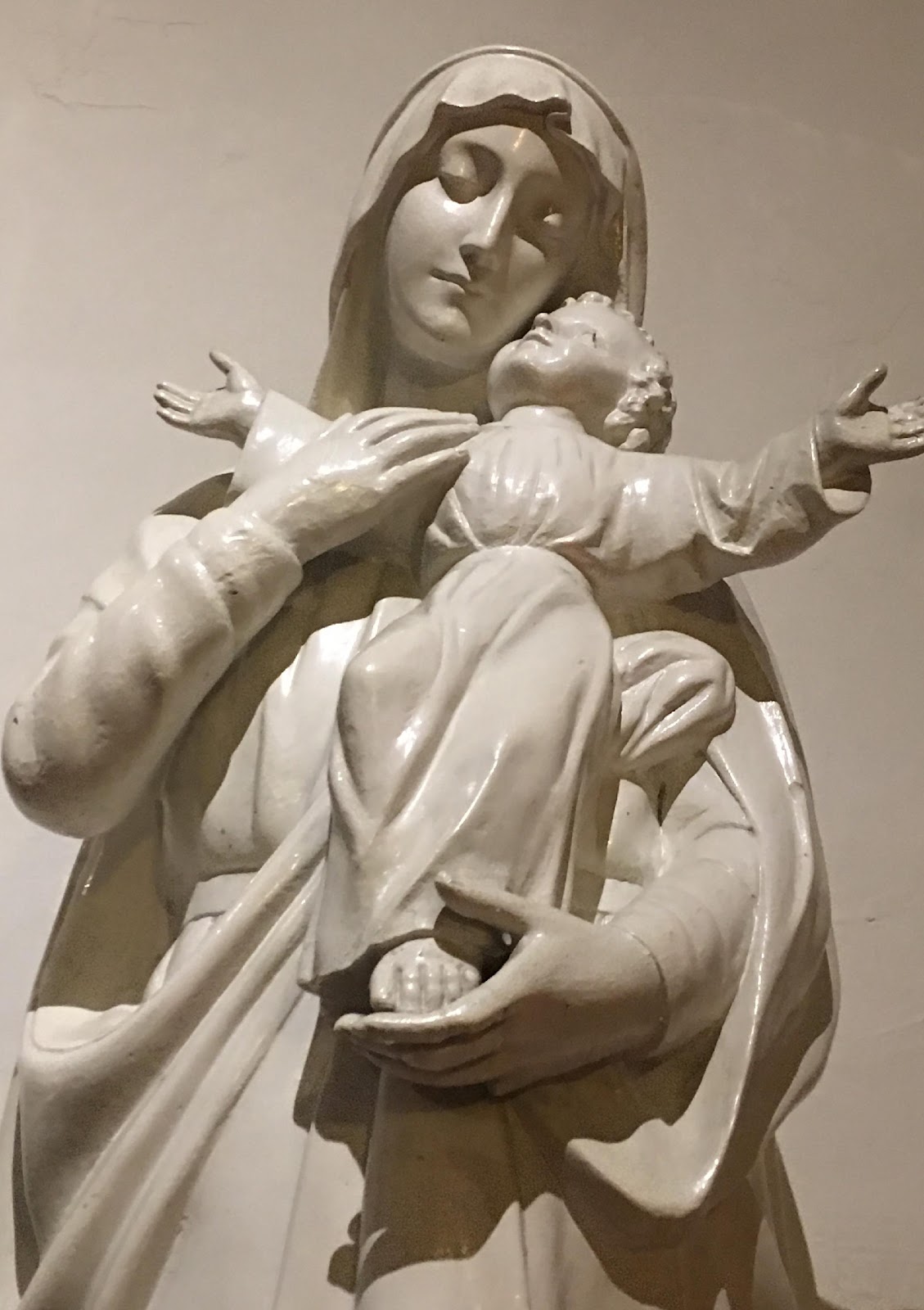
Receive the truth that God is perfectly joined with our creaturely existence. The fact that what we are, who we are — precisely in our unfinished, frail humanity — has been embraced and even assumed by the true object and fulfillment of our deepest longings. As Richard Rohr has said,"Incarnation is already redemption." In Christmas, we can see that we are always and already held by God as the infant Jesus is held in his mother’s arms.
The question is: will we become still enough to truly recognize this, to feel it, to let this mystery work its way ever deeper into our lives? For this to happen, we must rest. We must become still, like the holy family on the first Christmas. On this day, even if we must be a little like Martha, distracted by many tasks, let us remember that Jesus also calls us to be like her sister Mary, who sits at his feet and listens to what he is saying. After all, Jesus is the true guest and gift of Christmas and we welcome him first of all by resting and preparing room in our hearts to receive him who has already been given.
Sculpture at Holy Cross Monastery, Hyde Park, NY, photo by author
One of the core values of the ECCT is to “Try On”; so last year, I spent a semester experimenting with the devotional life of the Rosary. Every Thursday, I joined the Berkeley “Rosary train” and prayed with a handful of my peers. One week, I almost did not go, but I felt a nudge from the Holy Spirit, and I sensed God saying that there was a gift in the experience for me. So I went. While I was praying, I came to understand that Mary’s blessing is for all of us, especially for us women. I began to think about all the women in my family history and all the hardships these women have faced. They are the unsung heroines of my family who were and are the strong glue that held and holds my family together.
So I began to get a little creative. For each “Hail Mary”, I dedicated my prayer to a woman in my family. Hail mother, hail sister, hail daughter… “full of grace, the Lord is with you.” Already I could sense transformational power taking place. I was choosing life, not death. “Blessed is the fruit of your womb, Jesus.” When I prayed this prayer, it meant for me, I bless your children, your future children, the fruit of your faith, and all the fruitful potential that God has endowed in you; I bless it and I bless you. “Pray for us sinners…” This came to be a prayer of forgiveness- forgiveness for these women…for their sins known and unknown. I forgave myself for my sins against them, and I asked Jesus to forgive and redeem all of us from the consequences of the sins and the mistakes that have been made.
There are fifty -three chances to “Hail Mary” in the standard Rosary recitation, so I dedicated the entire semester to blessing and forgiving each woman in my family many times over, to set them free, to set myself free, and to make space for new possibilities of Grace in our family line. This Advent, I invite us to explore how we may bless the women in our immediate and extended families. Imagine what breakthrough we may experience in their lives, in the memory of their lives, in our own lives, and in our society by creating a culture of blessing and praise for the women whom God has placed around us.
Hail Mary
Hail Mary, full of grace. The Lord is with thee. Blessed art thou among women, and blessed is the fruit of thy womb, Jesus.
Holy Mary, Mother of God, pray for us sinners, now and at the hour of our death. Amen.
Devote yourselves to prayer, being watchful and thankful.
Colossians 4:2
It sounds so easy. So natural. So undeniably right. And yet sometimes it escapes us.
What does it mean to pray? There have been times in my life when I considered prayer to be those inescapable moments when I turned to God to ask for something to happen (or not) or for something that I thought was missing to be provided.; to fulfill some tangible need that I thought I was lacking. Other times, I have turned to prayer when I felt there was no place else to go. Over time I have come to understand prayer as those increasingly frequent conversations I have with God when I can step out of all of the self-imposed human limitations that I so frequently rely upon to guard me from daily turmoil, noise and distress and simply be my true self, in front of God who created me, and fold into the one relationship for which I was formed to be a part. No pretenses or assumptions. Just my own stark humility in the face of the One who loves me unconditionally. And it is through these prayers that I seek not tangible things but a better understanding of what God needs me to do.
There are countless verses in the Holy Scripture through which we learn that Jesus himself frequently found a way to remove himself from the enormous tension and noise swirling around him to go off alone, simply to pray to God the Father. It was in these times we can imagine that Jesus found himself closest to God and it was through these encounters that He found the strength, the resolve, and the call to move on.
I believe especially during this time of Advent, taking the time to pray through this lens is especially important not only in order to live into the invitation extended to us by our Presiding Bishop, but more importantly to intentionally come into conversation with God so that we might better understand the magnitude of that for which we are all anxiously awaiting – the birth of our Savior Jesus Christ.
During Advent I frequently find myself wondering about the avalanche of prayers that Mary and Joseph must have made as their wait for the baby’s arrival loomed closer and closer. Theirs was obviously a remarkable testament to faith and belief that God would provide against all the anxiety and uncertainty of what was to come. We can imagine their prayers not only for safe travel and protection but also for God’s love and support to guide them through the unknown and to ultimately better understand the journey that was leading them to Bethlehem. And soon their wait would yield the most unimaginably wonderful gift of all.
My prayer for all of us this Advent is that we find time among the tumult to be with God, in all our unguarded humanity, and fill ourselves with the strength we need to face the enormous challenges that await. And while we wait, we pray.
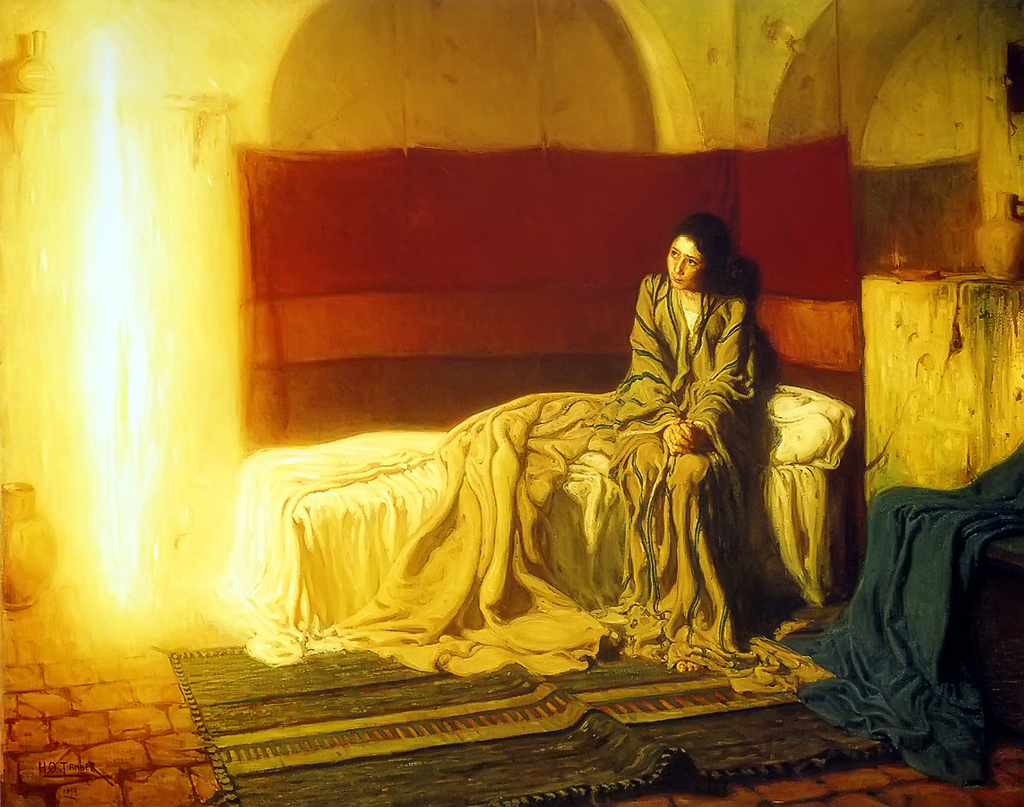
“Here am I, the servant of the Lord; let it be with me according to your word.” –Luke 1:38 In some ways, it’s odd to return to a gospel reading we read nearly nine months ago, when we celebrated the Annunciation. But that’s where our gospel has us this morning: on the cusp of something new. These days it can seem like we’re constantly looking for the next big thing. The newest iPhone or the newest car. A new job or a new school. As human beings, it’s almost like we’re wired to look for what comes next. As Christians, we’ve spent Advent doing just that—looking for the coming of the kingdom of God. That’s what our gospel starts to give us. An angel sent, not to Rome, but to a small town in the Middle East. A woman starting the revolution, not by rousing her kinsmen to arms, but by accepting, embracing, and nourishing in her body the Word of the Lord—a child conceived, not of the will of the flesh, but of the will of God. We’ve spent Advent looking for what is to come, imagining Christ’s coming in power and great glory, imagining God making all things new, not just in our hearts and minds but in the world around us, in a way visible to all peoples. This morning before Christmas, we turn back the clock to the nine months that have passed and live them out in the nine hours between our services this morning and our services tonight (a short pregnancy indeed!). We go back to the Annunciation—to God’s unexpected entry into human history and to Mary’s courageous response—and we find that God has already come to us. God is already making all things new, sometimes in ways that others around us can see, sometimes in ways that only we can perceive in our hearts, sometimes even in ways that only God can know. We are on the cusp of something new, if only we learn to have the eyes to see it and ears to hear it—if only we have the wisdom to join Mary in her reply: “Here am I, the servant of the Lord; let it be with me according to your word.” Post by Armando Ghinaglia
-- Photo labeled for reuse with modification from https://upload.wikimedia.org/wikipedia/commons/a/ac/Henry_Ossawa_Tanner_-_The_Annunciation.jpg
In our places of worship this morning, we likely heard the following the following passages:
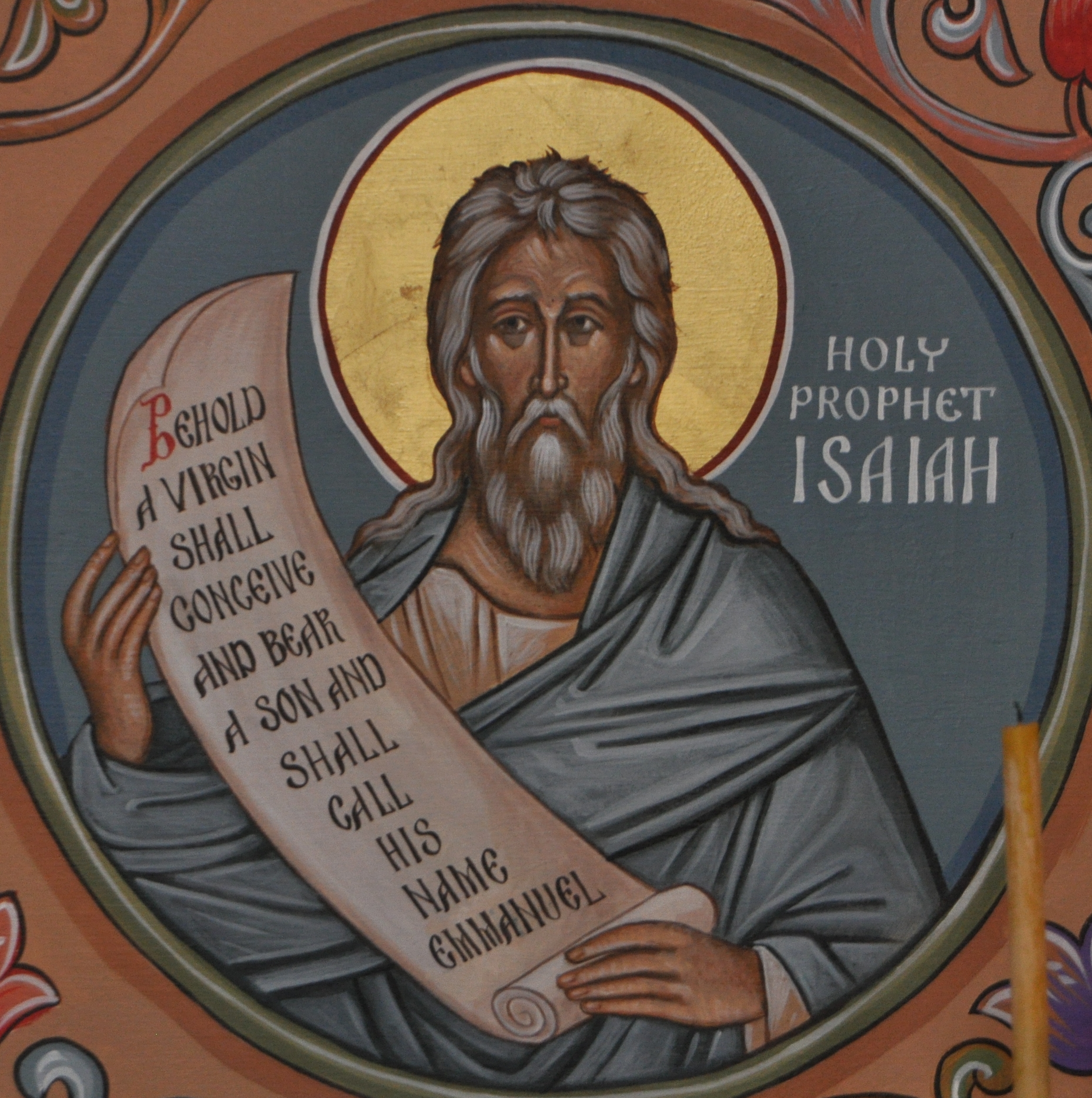
"Look, the young woman is with child and shall bear a son, and shall name him Immanuel." (Isaiah 7.14)
"All this took place to fulfill what had been spoken by the Lord through the prophet: "Look, the virgin shall conceive and bear a son, and they shall name him Emmanuel."" (Matthew 1.22, 23)
The prophet Isaiah is speaking a message of hope to his people in a time of uncertainty - that God is still with us. The divinity school student in me freely acknowledges that when this was written, Isaiah was not talking about Jesus. And yet, the narrative arc of a people and of a nation extends far beyond the immediate moment, or any one given time.
I often wonder what the founders of this nation would think if they could see our country today: had they even thought it would last one hundred years? Maybe. Maybe not. The words they spoke about equality, freedom, and the pursuit of happiness were not fully realized in their time, but they were a vision to be pursued, even if they could not see the full implications at that time.
When Matthew quotes the prophet Isaiah in his Gospel, he, together with the burgeoning Christian community, have come to realize the fulfillment of Isaiah's promise that God would dwell with his people - the consummation of that hope that was begun in Abraham (or from the foundations of the world, we might argue!), finding its enfleshment in Jesus.
Could Isaiah have foreseen as radical a fulfillment of his words as the Incarnation? Perhaps. Perhaps not. Whatever the case, I pray that we may all, in times of uncertainty or strife, have the confidence and strength to see that our very particular hopes for this world extend and continue beyond our immediate moments in history - and that they may just exist outside of our own lifetimes. But hope we must. How blessed are we that our greatest hope, Jesus our Lord, has already come to us.
A 17th-century Christian view of the Virgin Mary: The Immaculate Conception by Sassoferrato. Photograph: Christie's Images/Corbis
By Madeline Pantalena
I’ve had a deep love of the Magnificat since I first heard it as a child. To me, it is one of the most hopeful passages in the Bible.
“My soul proclaims the greatness of the Lord, my spirit rejoices in God my savior. For he has looked with favor on his lowly servant.”
My earliest memory of Mo Lederman, now my sponsoring rector, but then my elementary school chaplain, was her leading a chapel full of elementary schoolers in learning the Magnificat. Her strong voice echoed across the chapel as our high voices chimed in on the chorus.
Meeting Mo was another kind of hope. From the age of 8, I dreamed of becoming a priest. My mother, a staunch Roman Catholic, laughed and told me I never could do that. That I was a girl, and only boys could be priests. When I was transferred to St. Thomas’s Day School, an Episcopal school, I met Mo and for the first time saw a reflection of myself leading a congregation in worship. My dreams were rekindled.
At St. John’s North Guilford, where Mo is now the rector, we still sing the Magnificat the same way I did with Mo as a 10 year old. I am always immediately brought back to that first moment of rekindled hope—that I too could be like Mo, leading a congregation in a song of exquisite praise.
Though a date not found on our Anglican calendars, today is the
Feast of the Immaculate Conception of Mary for our Roman Catholic
brothers and sisters, with many large pilgrimages and processions taking
place in Latin America and abroad. And although
not defined until as recently as 1854, the Roman doctrine around the
Immaculate Conception is certainly consonant with tradition and reason,
if not scripture. I am not here to speculate or ponder the place of
Marian veneration in Anglicanism, however; but
I would suggest that in Mary we see a sign of profound Hope, which is the theme of this Advent blog series.
When we consider that God, in preparing the way for Jesus, could
move through and in the life of Mary to bring about the salvation of the
world, we should ponder all that preceded her 'Yes' at Gabriel's
Annunciation to her. As the Psalmist says, "Your
eyes beheld my limbs, yet unfinished in the womb; all of them were
written in your book..." (Ps. 139, v. 15).
As Rowan
Williams points out, "Mary stands for all the history of God's people,
the steady knowledge of promise and faithfulness; but she is also the
first explicit believer in Jesus: from her womb
flows the river of life. And when we echo her 'Yes,' the freshness of
God in Jesus flows from the center of our being too." (Footnote)
That we, likewise, can bear Christ to the world around us should
fill us with immense hopefulness for the life of that same world; and
that God begins working in and through us, even before we are aware of
it, leading to those moments where we are called
upon to act, should fill us with not only hope - yes - but awe and
wonder.
Footnote: Ponder These Things: Praying with Icons of the Virgin. Copyright 2002 by Rowan Williams. Published by Canterbury Press, Norwich, United Kingdom.
The voice came from out of nowhere, really. I had just helped my mother prepare the evening meal, and I was in the midst of cleaning up, when suddenly I heard it.
“Greetings, favored one!” it declared.
Now try to make sense of that, will you? First there was the fact that there was an angel in my kitchen. That was strange enough. But favored one? This angel was clearly lost!
Favored one. It made no sense.
I was only13. I had just helped my mother assemble the most meager evening meal. My hands and tunic were still covered in the flour I had ground, and, in my family’s mud-lined grotto, this greeting was so wildly out of place.
Perhaps the angel had taken a wrong turn in the jeweled city of Sepphoris, where there were plenty of beautiful and favored people. I was sure that this creature had stumbled into lowly Nazareth, by mistake. Do angels make mistakes? Perhaps he needed directions.
The problem was I could barely speak.
He must have seen the look on my face. I suppose you could say I was perplexed, but shocked-to-the-core is infinitely more accurate. I’d been cornered by an angel.
I opened my mouth to ask the lost angel for whom he was looking, and to determine whether or not I could help him find them, but before I could find my voice, the angel spoke again. “Do not be afraid, Mary, for you have found great favor with God.”
He called me by name. As impossible as it seemed, he was talking to me. Mary.
And then, right there in front of the hearth in my own home, that impossible angel laid out God’s whole impossible plan.
The Holy Spirit.
A baby.
A son, in my own womb.
When I was a mere child myself.
More than that, the angel told me that this child would grow up to sit on mighty David’s throne! Not just a son, but a king! Not just any king, but the Son of God. The Christ. The long-awaited Messiah.
This was almost too much for me to bear. I thought of Joseph, the man to whom I was engaged. The risks were great. Neither my family nor I held sway in our town, let alone in our culture. We were nobodies. And then there was the small matter that unmarried pregnant women could be publicly stoned to death. Would my community disown me? Would my family disown me? Would Joseph disown me? Would I disgrace them all? And how well would all of this go over with the Roman authorities? How, on earth, was a common peasant girl like me supposed to bear the Son of God into the world? The stakes seemed so impossibly high.
In a quaking voice, I mustered whatever shred of courage I had left. “How can this be?” I asked the angel, who for a moment looked as though he, too, was uneasy about this whole idea.* But, to his credit, he collected himself and assured me that “Nothing would be impossible with God.”
And there it was. It came down to faith.
Faith in a God whose love surpasses all understanding.
Faith in a God who acts in, and for, the world God loves.
Faith that God will go to the ends of the earth to reconcile God’s creation with God’s self.
Faith that this crazy plan could somehow bring about a holy child named Jesus and with him, the kingdom of God without end.
Faith that God saw promise and holiness, even in the likes of me.
I’ll be honest with you. As I pondered this message, I wanted to do what anyone would have wanted to do in that situation. I wanted to close my eyes and pretend it wasn’t happening. I wanted to laugh it off, call it impossible, tell the angel there was just no way, that he was mistaken, that he was crazy, and that angels appearing uninvited in your kitchen announcing, “Do not be afraid,” did not actually ease one’s fear in the least. I wanted to run away and hide. I wanted to tell him that there was no way a poor, terrified, unwed peasant teenager from Nazareth could pull off such a miraculous feat. But there was an angel in my kitchen, telling me that this was God’s miracle, not mine.+ Telling me that God was with me, that God loved me for exactly who I was, that God believed in me, and that God was inviting me to bring God into the world in the form of a newborn peasant baby.
After some thought, against all odds, and in spite of all the excuses I could think of, I said yes. That yes changed my life, and along with it, it changed the whole world.
You know the rest of the story.
The long and difficult trip to Bethlehem under orders by the Emperor.
The birth in a cave designated for animals.
The swaddling cloths.
The bright star.
The lowly shepherds announcing his birth.
My beautiful, vulnerable baby, even in his first moments of life, drew people in from the margins. And he spent his short life turning the whole known world on its head, as he healed the wounded, freed the oppressed, comforted the afflicted and afflicted the comfortable. In him, people met the love of God face to face. In him, people could envision an alternative way of life that affirmed all people, not just a privileged few. In him people of all stripes saw themselves as part of God’s holy and reconciling mission with God and one another. In him, they were saved from the world’s incessant NO, and instead, were transformed by God’s own YES!
I look back on that visit from the angel back in Nazareth so long ago, remembering how strange it felt to be invited into God’s plan to bear Jesus into the world. But I realize now that we are—each and every one of us—invited to be God bearers. We are each invited to be people who, through the power of the Holy Spirit, birth Jesus into this hurting and hungry world through our own hands, our own hearts, our own lives. We are invited to bring Jesus and his healing justice and transforming love into the brokenness, into the messiness, into the margins, into the places that our culture would rather just forget.
It can be unsettling at first, and, in truth, it can be downright heartbreaking at times, but God believed in me, just as much as God believes in every one of you. We each have the opportunity to answer God’s unique call to us with our own Yes, and with that Yes, we have the chance to join God in the transformation of the world.
As we celebrate the birth of Jesus this Christmas Eve, I ask you to consider that, through God’s deep love and the work of the Holy Spirit, Jesus continually seeks to be born anew in you, if you’ll only let him in. We are made to be Godbearers, all of us. And, as a wise angel once told me, even at times when the odds make that seem so very unlikely, once you say Yes, absolutely nothing is impossible with God.
*Buechner, Frederick. Peculiar Treasures: A Biblical Who’s Who. San Francisco: HarperOne, 1993. p. 39.
+Dean, Kenda Creasy and Ron Foster. The Godbearing Life. Nashville: Upper Room Books, 1998. p.49.