Showing posts with label poem. Show all posts

Thursday, December 20, 2018

Worship - December 20, 2019

Photo by Bill Burkhart

I am made whole by worship.  I want worship to be as widely available as possible. Maybe we should open thumbnail-sized churches like little lending libraries and give ourselves away. Our resources are secure because they are not monetary. They are a treasure beyond price: a story that reframes the meaning of our lives. Take. Eat.

Worship.


Holy Sonnets: Batter my heart, three-person'd God

Batter my heart, three-person'd God, for you
As yet but knock, breathe, shine, and seek to mend;
That I may rise and stand, o'erthrow me, and bend
Your force to break, blow, burn, and make me new.
I, like an usurp'd town to another due,
Labor to admit you, but oh, to no end;
Reason, your viceroy in me, me should defend,
But is captiv'd, and proves weak or untrue.
Yet dearly I love you, and would be lov'd fain,
But am betroth'd unto your enemy;
Divorce me, untie or break that knot again,
Take me to you, imprison me, for I,
Except you enthrall me, never shall be free,
Nor ever chaste, except you ravish me.

By John Donne


Use your own words. Tell the story.

Post by Mary Barnett

Saturday, December 24, 2016

Twas the Night Before Christmas . . .

Displaying mouse.jpg
http://www.gemmacorrell.com/


By Madeline Pantalena

“’Twas the night before Christmas when all through the house, not a creature was stirring, not even a mouse.”

Many know this iconic Christmas Eve story, but few realize it was written by an Episcopalian!

Clement Clark Moore claimed authorship of these well-known verses in 1837, 14 years after their first anonymous publication in 1823. While is authorship is sometimes disputed, I like to think one of our own created this famous piece of Americana. Moore was the founding warden of St. Luke in the Fields, the church I am interning at this year in New York City, and was a professor of Oriental and Greek literature and Divinity and Biblical Learning at General Theological Seminary, which was developed on land he donated from his large estate in what is today the Chelsea neighborhood of New York.

While many would argue that this poem is entirely secular, I can see a Christian influence. Advent is a season of hope and waiting. While in the Christian tradition, we wait specifically for Christ’s return through the birth narrative, other traditions of waiting and hoping are also at play. Solstice, the return of the sun as days begin to lengthen again on December 23rd marks both the first day of winter, but the darkest day of the year, the last night before the light begins to linger again. And the waiting for Santa Claus, or “St. Nick,” as Moore refers to the “right jolly old elf” reminds me of both. There is hope, joy, and wonder when waiting for the return of Christ, light, or even Santa.

Thank you for joining us on this Advent journey of hope and reflection. Have a blessed Christmas and a joyous New Year!

Tuesday, December 20, 2016

Bethlehem Down


Bethlehem Down
Words by Bruce Blunt (1899-1957)
Music by Peter Warlock (1894-1930)

“When He is King we will give him the King's gifts,
Myrrh for its sweetness, and gold for a crown,
Beautiful robes,” said the young girl to Joseph,
Fair with her first-born on Bethlehem Down.

Bethlehem Down is full of the starlight
Winds for the spices, and stars for the gold,
Mary for sleep, and for lullaby music
Songs of a shepherd by Bethlehem fold.

When He is King they will clothe him in grave-sheets,
Myrrh for embalming, and wood for a crown,
He that lies now in the white arms of Mary,
Sleeping so lightly on Bethlehem Down.

Here He has peace and a short while for dreaming,
Close huddled oxen to keep him from cold,
Mary for love, and for lullaby music
Songs of a shepherd by Bethlehem fold.
__________________
Reflection by Benjamin Straley 
I know this is an Advent blog, but after the Fourth Sunday of Advent, my mind has shifted over toward Christmas, and this carol text and its musical setting are among my very favorites. Its origins are a bit peculiar, however. 
It came about as a submission to the London Daily Telegraph’s annual carol contest.  The poet, Bruce Blunt, and his friend, the composer, Peter Warlock were notorious drunks, and found themselves strapped for cash approaching Christmas. So they entered the Telegraph’s contest, duly won, and used the prize money to finance an “immortal carouse” on Christmas Eve 1927.

Despite the impure motivation of its composition, the haunting poignancy of the text, and the music’s ability to convey at once the comfort of Mary’s arms as well as the agony of the Passion, drive me to listen to it over and over again during the Advent and Christmas seasons.

The first stanza, with Mary’s hopes for her newborn, who she knows is the Son of God, stand in stark contrast to the fulfillment of those hopes in the third stanza. I’m not so sure Mary was as naïve as the poet makes out, but even if she understood that Jesus would be King, maybe she didn’t yet know what that would mean, ultimately.  Her hopes were the hopes of a nation – but Jesus’ death defied all their expectations of what the Messiah looked like.

I wonder, when we talk about Hope – and Advent as a season of Hope – what kind of Hope do we hold in our spiritual imaginations? Is it the warm hope of an infant laid in a manger, or it is a cruciform hope – one that allows its fulfillment to be realized in ways which we might not readily embrace.  As I write this, I think, perhaps, “Where is my Christmas joy?” It’s there, I assure you.  But as I sit here at my desk, my eyes notice the liturgical calendar to the right of my computer, and I can’t help but be reminded that the Twelve Days of Christmas include the Feast Days of St. Stephen, the first martyr, The Holy Innocents, and St. Thomas Becket, murdered archbishop of Canterbury. The Church has always held joy and suffering in tension with one another, it would seem.  It is this nuanced understanding of hope, viewed through a Christian lens, that prevents our celebrations of Christmas from being the sanitized, consumer-driven ones we see all around us this time of year.

So as we near the end of our Advent journey, and our preparations lead us ever closer to our commemoration of the Incarnation, I wish you who read this a truly blessed Christmas, one filled with an abundance of peace, a peace which surpasses all our understanding.

Tuesday, December 13, 2016

Death be Not Proud in the Season of Advent


Death Be Not Proud
By John Donne (1572-1631)

Death be not proud, though some have called thee
Mighty and dreadfull, for, thou art not soe,
For, those, whom thou think'st, thou dost overthrow,
Die not, poore death, nor yet canst thou kill mee.
From rest and sleepe, which but thy pictures bee,
Much pleasure, then from thee, much more must flow,
And soonest our best men with thee doe goe,
Rest of their bones, and soules deliverie.
Thou art slave to Fate, Chance, kings, and desperate men,
And dost with poyson, warre, and sicknesse dwell,
And poppie, or charmes can make us sleepe as well,
And better then thy stroake; why swell'st thou then?
One short sleepe past, wee wake eternally,
And death shall be no more; death, thou shalt die.

By Ann Perrott

It seems odd to me that during this season of Advent, a season of hopeful expectation and joy that my older brother, John is losing his battle with cancer.  This season of waiting for the joyous occasion of our Savior is juxtaposed with the expectation of the end of a life. John does not have many days left but is quite comfortable and resolved to his situation. We are watchful and content to sit with him and read, listen to music or be silent.  It has been a very sacramental time for me.  Theologian, Leonardo Goff writes, “In order to see something as a sacrament, we must be looking with the eyes of faith.”  This is exactly how our family sees this experience with John.  We know the love God has for John, and death, as described by John Donne above will not win because “wee wake eternally.” Donne puts death in its place in this sonnet. The hope of eternal life—that is the deeper meaning here, and one which keeps us praying by John’s side.
So this Advent for me has included some grief time and time for joy with the coming of our Savior, Jesus.  Both events hold so much love and so much hope.  What beautiful gifts in a beautiful season.


Friday, December 9, 2016

Poem with reflection by Thom Peters

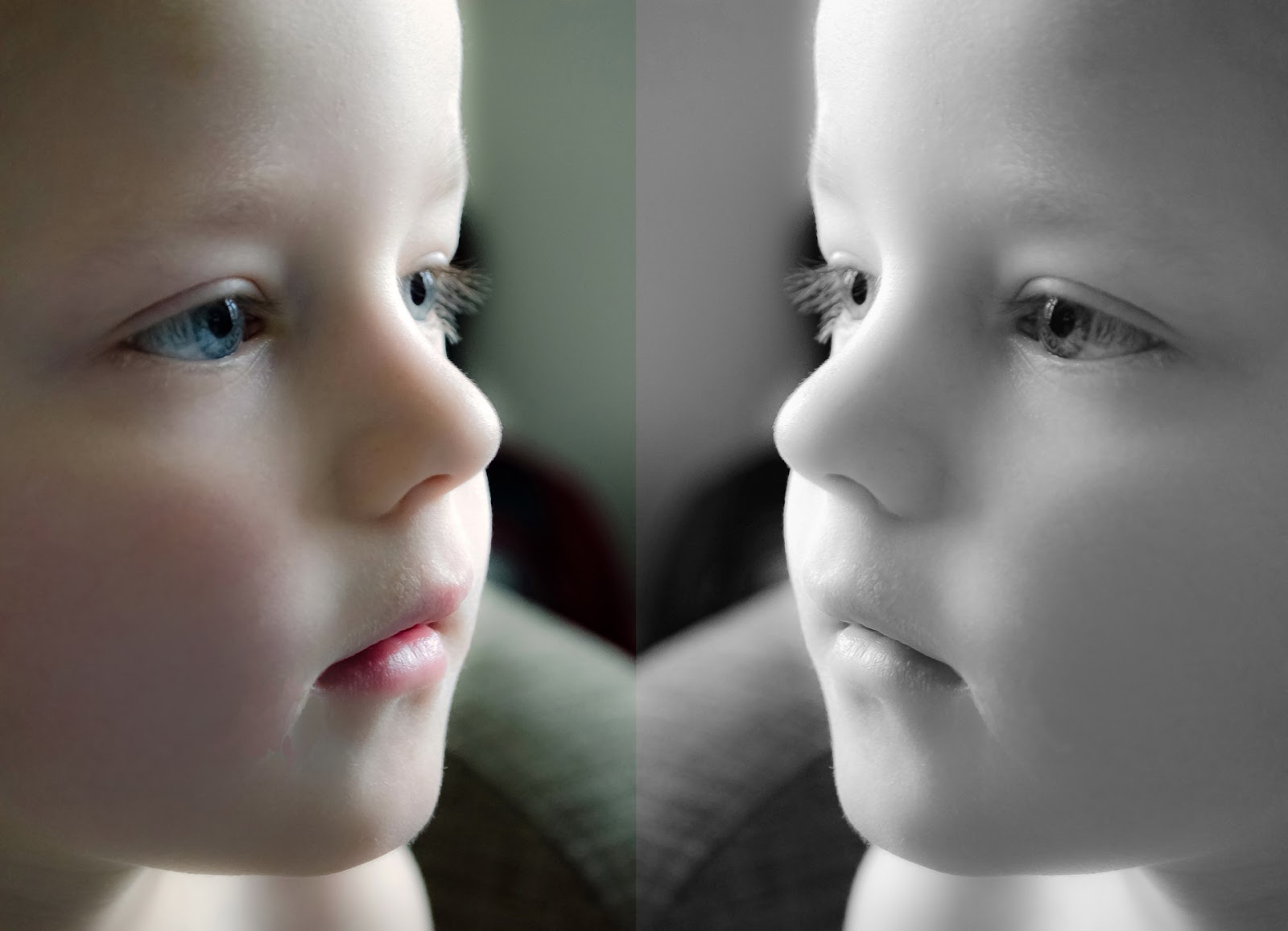
... Mirror Mirror Effect


Hope Holds to Christ
by Gerard Manley Hopkins (1844-1899)


Hope holds to Christ the mind’s own mirror out
To take His lovely likeness more and more.
It will not well, so she would bring about
An ever brighter burnish than before
And turns to wash it from her welling eyes
And breathes the blots off all with sighs on sighs.
Her glass is blest but she as good as blind
Holds till hand aches and wonders what is there;
Her glass drinks light, she darkles down behind,
All of her glorious gainings unaware.
. . . . . . . .
I told you that she turned her mirror dim
Betweenwhiles, but she sees herself not Him.

Hopkins, Gerard Manley. Poems. London: Humphrey Milford, 1918; Bartleby.com, 1999. www.bartleby.com/122/. November 22, 2016.

-------

This poem is hard to understand at first reading, but try it a second time.

Imagine you are Hope, and you desperately want to see Christ in this magical mirror.  But you keep seeing yourself, so you keep trying to make the image in the mirror clearer.  You wash it with your tears.  And then with your breath.  You keep trying and trying, trying so long that your hand begins to ache holding up the mirror.  But still, you see yourself.

For now.  Advent is that time of waiting, knowing that someday we will be able to see Christ fully.  There will come a time when we shall see all things more clearly.  

For now we see in a mirror, dimly, but then we will see face to face. Now I know only in part; then I will know fully, even as I have been fully known.  
(I Corinthians 13:12)

Tuesday, November 29, 2016

Poem on Hope selected by Thom Peters


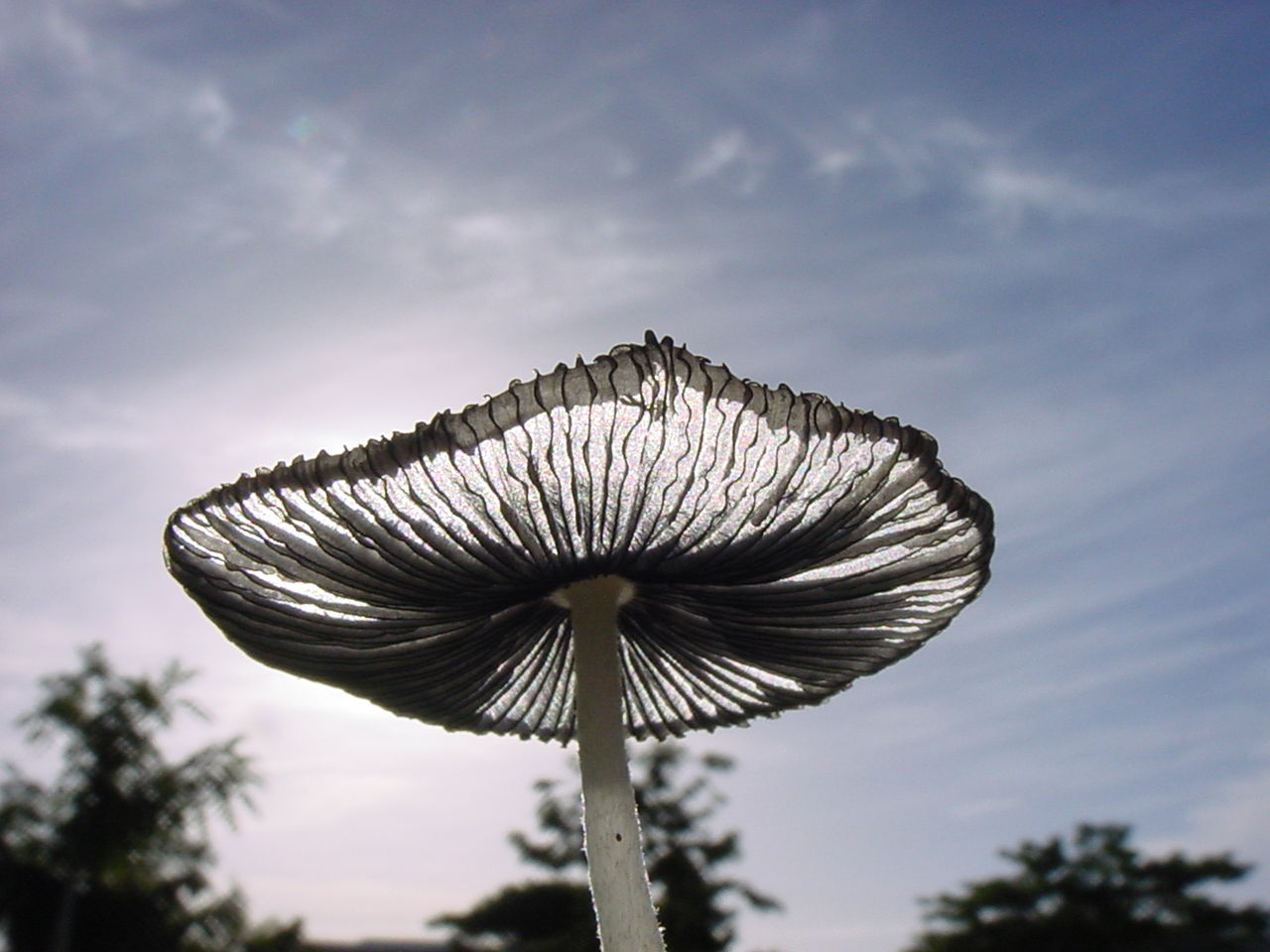
File:Backlit mushroom.jpg

https://en.wikipedia.org/wiki/File:Backlit_mushroom.jpg#/media/File:Backlit_mushroom.jpg

Hope

It hovers in dark corners
before the lights are turned on,
    it shakes sleep from its eyes
    and drops from mushroom gills,
        it explodes in the starry heads
        of dandelions turned sages,
            it sticks to the wings of green angels
            that sail from the tops of maples.

It sprouts in each occluded eye
of the many-eyed potato,
    it lives in each earthworm segment
    surviving cruelty,
        it is the motion that runs
        from the eyes to the tail of a dog,
            it is the mouth that inflates the lungs
            of the child that has just been born.

It is the singular gift
we cannot destroy in ourselves,
the argument that refutes death,
the genius that invents the future,
all we know of God.

It is the serum which makes us swear
not to betray one another;
it is in this poem, trying to speak.
------
 
I found this description of hope most helpful the summer I spent as a hospital chaplain. There, in the clinical sterility that often infects a patient’s room, the images of nature juxtaposed with things one might easily associate with the experience of a patient brought new insight into what exactly constitutes hope.  It is something which we struggle to frame in our language, so we reach for poetry to make our best attempt.  It is that which is beyond plain “reason,” that which begs for us to recognize our very souls.

- Thom Peters