Showing posts with label light. Show all posts

Sunday, December 9, 2018

Way of Love - December 9

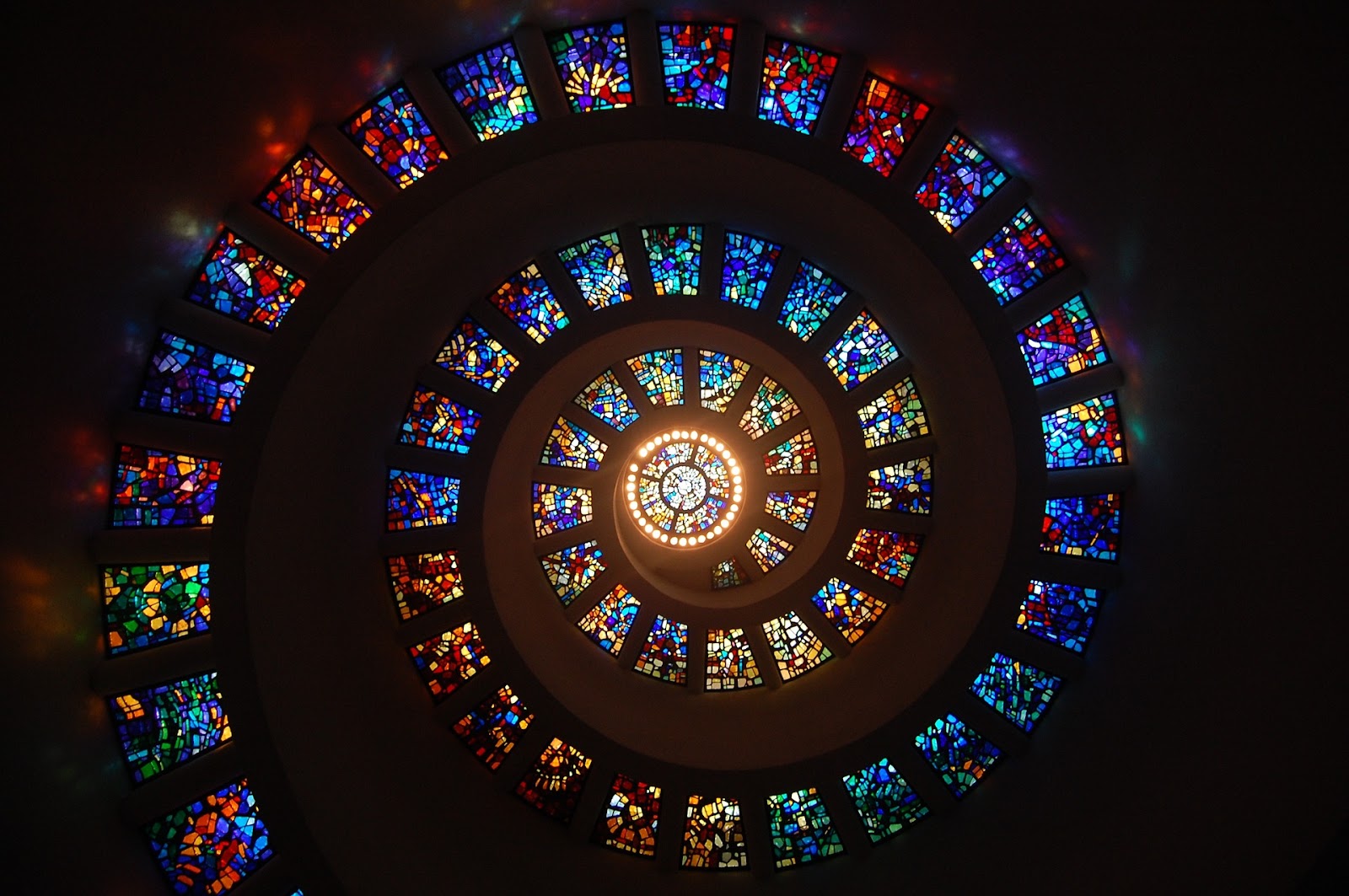
https://pixabay.com/en/stained-glass-spiral-circle-pattern-1181864/

Advent is a paradox. It is said to be a time of preparation for the coming of Christ into our world and into our lives, and yet, of course, we only observe Advent because Christ has already come. The Word of God was formed in the womb of his mother Mary and “born in human likeness” (Philippians 2:7). The light of the world is already shining brightly. Yes, Advent points forward to the definitive coming of Christ, but, equally, it draws our attention to what already is.

So, if we take seriously that Christ has already come, then what are we preparing for? It must be a preparation of ourselves to behold and respond to what is already present, available, and shining brightly. Advent calls us to train our perception to witness Christ and the way of love that he is already working in the world around us and calling us into. Advent is a challenge to learn, again and again, how to see.

This is important, because the de facto mode of seeing and being in the world is too often not the way of love. The way of love, the way of Christ, will always be countercultural even as it is in harmony with our inmost being, as it is created in the image of God.

As one of my favorite movies, The Tree of Life, puts it:

"The nuns taught us there are two ways through life: the way of Nature and the way of Grace. You have to choose which one you'll follow.

Grace doesn't try to please itself. Accepts being slighted, forgotten, disliked. Accepts insults and injuries.

Nature only wants to please itself. Get others to please it too. Likes to lord it over them. To have its own way. It finds reasons to be unhappy when all the world is shining around it. And love is smiling through all things."

The way of Nature as it's described here is blind. Blind to the glory shining in all the world, blind to the love smiling through all things. And so, estranged from the grace pervading all things, estranged from the source of life and goodness and joy, it hardens, becomes brittle, insists on its own way.

Jesus was a healer of the blind. Throughout the Gospels, he repeatedly restores their sight. At the beginning of his ministry, he announces that he has been sent to "proclaim... recovery of sight to the blind” (Luke 4:18).

How can Jesus, the one “who is and who was and who is to come," (Revelation 1:4) open my eyes, open our eyes, this Advent? What blind spots does he want to heal in us so that we can see, more and more, the light of Christ shining in the world? What dust on the window of our souls does he want to clear away so that we, like Mary the Mother of God, might be places where the way of love radiates into the world?

Post by John Kennedy

Friday, December 22, 2017

Returning and Renewal

Embed from Getty Images

“Thus says the Lord: I will return to Zion, and will dwell in the midst of Jerusalem; Jerusalem shall be called the faithful city, and the mountain of the Lord of hosts shall be called the holy mountain. Thus says the Lord of hosts: Old men and old women shall again sit in the streets of Jerusalem, each with staff in hand because of their great age. And the streets of the city shall be full of boys and girls playing in its streets. Thus says the Lord of hosts: Even though it seems impossible to the remnant of this people in these days, should it also seem impossible to me, says the Lord of hosts?” –Zechariah 8:3-6, from the reading for today’s Daily Office
Last weekend, as I was working on another piece of writing, I came across “The Second Coming,” that famous and frightening poem by W. B. Yeats.  Written in 1919, in the wake of the First World War, “The Second Coming” is a vision of a world literally spiraling out of control. The very best of human achievements—Enlightenment philosophy, liberal economics, science and technology—had culminated in a conflict among nations that resulted in death and suffering on a scale which before this had been simply unimaginable.
Nearly 100 years after Yeats wrote “The Second Coming,” his words seem to remain acutely appropriate for our times.  Following so many stories in the news of our world and our nation over the past one, two, five years, I have reminded myself over and over again of the line, “Things fall apart; the centre cannot hold; / Mere anarchy is loosed upon the world.”  And when I think about those people in positions of power—political leaders in particular but also those who run institutions whose impacts on our life are immeasurable—I keep coming back to Yeats’s assertion that “The best lack all conviction, while the worst / Are full of passionate intensity.”
W. B. Yeats was not the first person to feel like the world around him was falling apart, dissolving into chaos.  He wasn’t the first to recognize that, for all the progress human civilization can make, the specter of war, strife, and violence is always with us.  And he certainly wasn’t the first to envision, in the midst of frightening and incomprehensible historical change, that some kind of major break—a revelation, the Second Coming—was on the horizon. For Yeats, the historical circumstances of the twentieth century meant that the culmination, the decisive break, would have to be terrible, a “rough beast” ushering in something dark and unknown.
In dark times, when it seems like the world is spinning out of control, I’m grateful for passages like the one from today’s Morning Prayer, from the Book of Zechariah.  Here, the prophet presents a vision of a world renewed, a world at peace living with joy in the presence of God.  Even when circumstances seem most dire, when reconciliation among people seems like a naïve dream, we are reminded that with God, nothing is impossible.
Passages like these remind me that the season of Advent, and the celebration of the Incarnation we now look forward to, are not only about our personal, individual renewal (although certainly they are!).  Through the Incarnation, God has offered Godself to walk among us, to renew our societies and cultures, our cities and nations.  Zechariah’s vision is of a world brought back into shape through God’s healing power, not through human accomplishment.
But the vision of renewal does not mean that we can expect to simply sit here and wait for God to do this work.  We are not called to lack all conviction!  Today’s passage begins with God’s call to us to “Render true judgments, show kindness and mercy to one another; do not oppress the widow, the orphan, the alien, or the poor; and do not devise evil in your hearts against one another.”  By heeding this call, and seeking to walk in God’s ways and live in relationships of love and charity with one another, we can participate in God’s work of reconciliation.
As my friend and colleague Carrie wrote yesterday’s solstice, “just when it seems like it will be dark forever, the light returns.”  When our world seems at its most dark, we are offered God’s promise of light.  How we respond to that promise may be up to us, but the promise—and the hope it brings—will always be there.

Post by Jett McAlister

Thursday, December 21, 2017

Be Our Light in the Darkness, O Lord


Be our light in the darkness, O Lord, and in your great mercy
defend us from all perils and dangers of this night; for the
love of your only Son, our Savior Jesus Christ. Amen.


In the western parts of Britain, there is a tradition of toasting to apple trees during the long, dark winter days: wishing them good health, for their health would ensure next year’s crop. Was hail, frequently spelled wassail, is the greeting, and it means “to be in good health.” The world that led to this tradition is so much more permeable than modern industrialized life. Artificial lights, well-insulated and heated homes, food that can be imported from just about anywhere, cars to travel over snowy roads, and my good friend the winter parka all wrap us up, keep most of us safe from winter. Winter becomes an inconvenience, not a threat.

And yet, as Anglicans, we come from a people who counted the days until the sun came back. Who toasted apple trees and prayed for the deep winter to break in a timely fashion. Who gathered around life-giving fires and told stories through the long winter nights, creating a place of glowing warmth in the midst of the raging cold.

With this atmosphere in mind, I can much better appreciate what it means to celebrate the coming of the Light, who breaks through the darkness. The time around the solstice seems like the darkness will never end; but just when it seems like it will be dark forever, the light returns. While we believe Jesus is always present in our world and in our lives, in Advent we anticipate retelling the story of Jesus’ particular entry into our world when he was born, as we hear so often, in a stable in Bethlehem. In Advent we also look ahead to the time when he will come back, as a king, to bring his kingdom to earth. We look back, and we look forward. But if we think of Jesus’ birth and his return as times of power and light, then where does that leave us now, in the time between? In a time of darkness and weakness?


I like to think we can be like our spiritual ancestors, who toasted to the promise of new life, even in the middle of darkness. We can see that the darkness is not empty, but full of the seeds of a kingdom that is more just and beautiful than the one we inhabit. We can pray for the coming of the Light, preparing ourselves to welcome him in.

Post by Carrie Combs

Photo used with permission by Chris Randall Fromm his blog: http://www.ilovenewhaven.org/2014/11/after-compline-chris-randall.html?q=Compline

Saturday, December 16, 2017

Darkness has a tangible quality

Embed from Getty Images


For a while at the end of seminary, my husband Nik and I followed a fairly strict routine. Around 8 or so, when it had finally started to get dark in Tennessee, we turned off all the harsh fluorescent lights in our student apartment and lit candles. We called it “candle time,” and we started doing it as a way to spend intentional time together at the end of a long day, to better wind down. There was one evening when my orchestra rehearsal ran long and I biked home in a rush and hurried to the door juggling my French horn, music folder, water bottle, and keys. When I opened the door, instead of more noise, more bright stage lights, more people asking something of me, there was only soft light, warmth, and quiet. And when we finally blew out the candles, some of that warmth remained. Our apartment, rather than being sterile student housing with thin carpeting and ugly cabinets, had been purified somehow. The darkness had been changed.


Darkness is not always empty. Right now, I am rereading Madeleine L’Engle’s A Wrinkle in Time and there is a point when Meg and the other characters travel to a distant planet by way of a wrinkle in space. While they are traveling, Meg was completely alone. Reflecting back on it after, she realizes: “It was not as simple as darkness, or absence of light. Darkness has a tangible quality; it can be moved through and felt; in darkness you can bark your shins; the world of things still exists around you.”


In Advent, as the days shorten and the nights lengthen, I am finding myself leaning into that darkness, the type of darkness that is full, rather than empty. I am pressing into the penitential Sunday lections and prayers, the apocalyptic Daily Office readings. I am casting around in the dark and realizing I am not alone. The darkness falling in Advent is not the empty darkness of Meg’s travel through space, but a darkness that is full of active waiting, anticipation, and hope. It is the darkness that falls after candle time: holy, refreshing, allowing you to go deeper and deeper, all the while knowing that you are safe.

Post by Carrie Combs

Wednesday, December 6, 2017

St. Nicholas

Embed from Getty Images

Today is the feast day of Saint Nicholas of Myra, one of the most popular saints in both Eastern and Western Christianity. As many American children do, I believed in “Santa Claus,” and at a very young age asked whether Santa was real, whether he actually came and delivered presents. The answer (I won’t spoil it for you if you don’t already know!) was painful, and I actually blocked out this memory and had to ask again the next year. I was comforted when I found out that the Bishop of Myra, who visited my church, St. Peter’s, every year, was the same person as Santa Claus.


I was sad to lose the Santa myth as a child. I loved the magical transformation of our house from Christmas Eve to Christmas morning. Often the anticipation, the joy of sneaking downstairs and seeing the beautiful gifts we were lucky to have, was more enjoyable than the gifts themselves. I loved the idea that overnight, something magical happens. Something changes.


Learning more about the legends of Saint Nicholas, I find the same type of magic present in his story. While he is best known for providing (in secret, of course) three bags of gold to a poor family for their daughters’ dowries, he also is said to have freed prisoners, restored children from death, and appeared to sailors in the midst of a storm. The magic of “Santa” is actually the magic and wonder that comes from being around someone very kind, holy, and good. Someone who loved God so much that he would help others in total darkness, in secret, asking nothing in return.


In Advent, we reflect on the imagery of darkness: specifically, the darkness that precedes the light coming into the world. Night time is not empty but a time full of anticipation, reflection, and active waiting. It is a magic time. And when morning comes, something is different. Something changes.


Post by Carrie Combs


Hagiographic information from Stars in a Dark World: Stories of the Saints and Holy Days of the Liturgy by Fr. John-Julian, OJN.

Wednesday, December 21, 2016

Winter Solstice


By Stacey Kohl


Darkness is a word we don’t often associate with the more positive aspects of life.
When we were children, it was easy to imagine the monster as it lurked in the darkened corner of our room or in the blackness of the night outside our windows. As adults, we may no longer live in fear of the monsters lurking under out beds, but we still fear the dark.
As adults we fear the hidden; we fear the unknown; we still fear the dark.
But is the dark truly something we should fear?
With today dawns the shortest day of the year in the Northern Hemisphere. For those of us living in Connecticut, the sun will rise on this day at 7:11 a.m. and set scarcely over 9 hours later. As the sun dips below the horizon, we will be greeted by the longest night of the year, the Winter Solstice. Over 14 hours of darkness will surround us this night leaving us in much the same state as our ancestors were, seeking out places of light and warmth from the dark and the cold.
But for those brave enough to venture out this night, you may be greeted by a strange realization. Darkness, even the inky blackness of the Winter Solstice, is never truly dark at all. Christmas lights glow on house-fronts, candles burn in windows, streetlamps bathe corners in warm yellow light. And for those lucky enough to move farther out, away from the man-made lights of the cities, you may even be greeted by a greater gift—the lights of God. Stars more numerous than we could ever name, meteors streaking by in the guise of “shooting stars,” and the waning light of the moon as it chases the night across the sky.
These are the gifts of darkness. Darkness can create for us a place of rest, a place of stillness, a place of noticing. Without darkness’ soft and gentle enfolding, the glare of the day would be too much; too stark, too real. Without darkness, we would never know the light—both the bright light of day and the soft glow of stars at night.
And so, on this night of great and consuming darkness let us remember that we truly have nothing to fear from the darkness. After all, without darkness, there is no light.

Saturday, December 17, 2016

Oh, how I need those candles . . .


By Ann Perrott

   Each week, when a candle is lit on the Advent wreath, I am reminded that Jesus is the ‘light of the world.’  In between those Advent Sundays part of my focus turns to my work and life as I know it.  And, of course there is a return to reports of war, hunger, homelessness, prison conditions and every other bad thing that is going on in the world.  I can easily feel exhausted with all of it. Why does hope feel so out of reach to me these days?  I have always been an optimist—constantly looking at the glass half full, no matter what the world’s condition.  And even though this Advent season brings a personal grief to my family, I feel overwhelmingly bogged down with hopelessness lately that is evident in almost every corner of the world.
 I have come to understand (after reading a lot of Richard Rohr), that what I need to do is to let go of the “self,” the ego that weighs me down.  My own world view is skewed.  I think to myself, “Why isn’t something being done in this country or that one?  Don’t we have to fix this now before too many thousands more people are killed or hurt?  How many wars can the world take at one time, how many horrible dictators?  So much devastation and I cannot do a thing about it.  I hope God knows how I feel about that situation in the Philippines.”  I feel powerless, and I believe it is because I take God out of the equation and replace it with Ann.  When I do that, darkness can be like a canvas in my life, covering up the light I may be missing.
 Then there is the understanding I have that darkness is a part of life.  There are a lot of wonderful things happening in the world—even all around me.  I have to have better eyes to see and leave the world’s problems to God.

Tuesday, November 29, 2016

Poem on Hope selected by Thom Peters


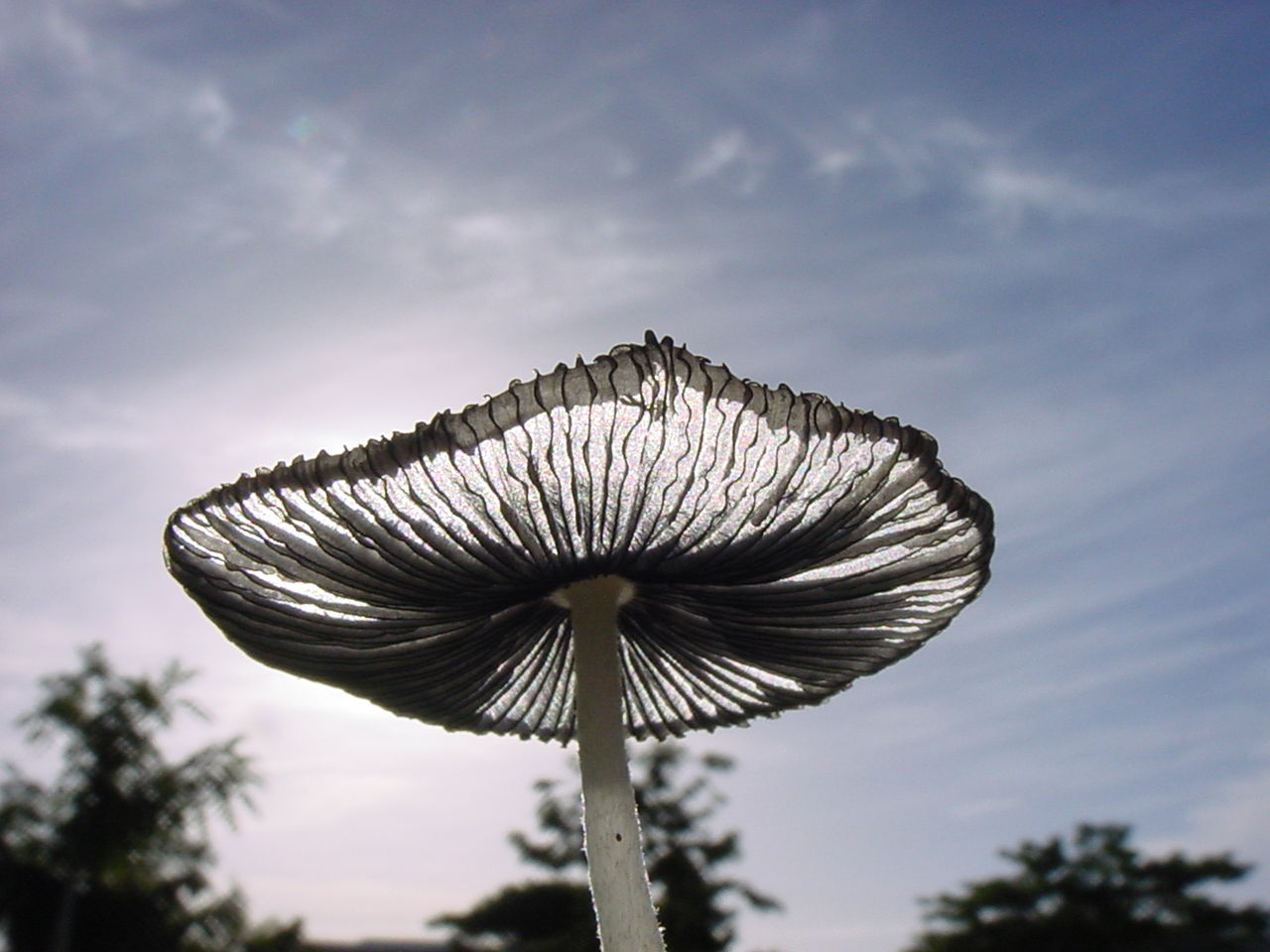
File:Backlit mushroom.jpg

https://en.wikipedia.org/wiki/File:Backlit_mushroom.jpg#/media/File:Backlit_mushroom.jpg

Hope

It hovers in dark corners
before the lights are turned on,
    it shakes sleep from its eyes
    and drops from mushroom gills,
        it explodes in the starry heads
        of dandelions turned sages,
            it sticks to the wings of green angels
            that sail from the tops of maples.

It sprouts in each occluded eye
of the many-eyed potato,
    it lives in each earthworm segment
    surviving cruelty,
        it is the motion that runs
        from the eyes to the tail of a dog,
            it is the mouth that inflates the lungs
            of the child that has just been born.

It is the singular gift
we cannot destroy in ourselves,
the argument that refutes death,
the genius that invents the future,
all we know of God.

It is the serum which makes us swear
not to betray one another;
it is in this poem, trying to speak.
------
 
I found this description of hope most helpful the summer I spent as a hospital chaplain. There, in the clinical sterility that often infects a patient’s room, the images of nature juxtaposed with things one might easily associate with the experience of a patient brought new insight into what exactly constitutes hope.  It is something which we struggle to frame in our language, so we reach for poetry to make our best attempt.  It is that which is beyond plain “reason,” that which begs for us to recognize our very souls.

- Thom Peters

Monday, December 21, 2015

Time for Renewal


Come, shine on those in darkness and the shadow of death.
Click on the Antiphon above to hear it chanted. 
 
Light within all light
Soul behind all souls
At the breaking of dawn
At the coming of day
We wait and watch.
Your Light within the morning light
Your Soul within the human soul
Your Presence beckoning to us from the heart of life.
In the dawning of this day
Let us know fresh shinings in our soul.
In the growing colors of new beginnings all around us
Let us know the first lights of our heart.
Great Star of morning
Inner flame of the universe
Let us be a colour in this new dawning.

May the angels of light
Glisten for us this day.
May the sparks of infinite beauty
Dance in the eyes of those we love.
May the universe
Be on fire with Presence for us this day.
May the new sun or moon’s rising
Grace us with gratitude.
Let the whole earth shine
And its waters breathe with Spirit.
Let eternal winds stir the soil of our soul
And fresh awakenings rise within us
May mighty messengers of light
Glisten in all things this day
May we be summoned to reverence,
May we hear the great call to life.

FROM: John Philip Newell, Praying with the Earth: A Prayerbook for Peace. Grand Rapids: Eerdmans, 2011), 4.